The Realism Is in the Timing

INTRO
It wasn’t the face
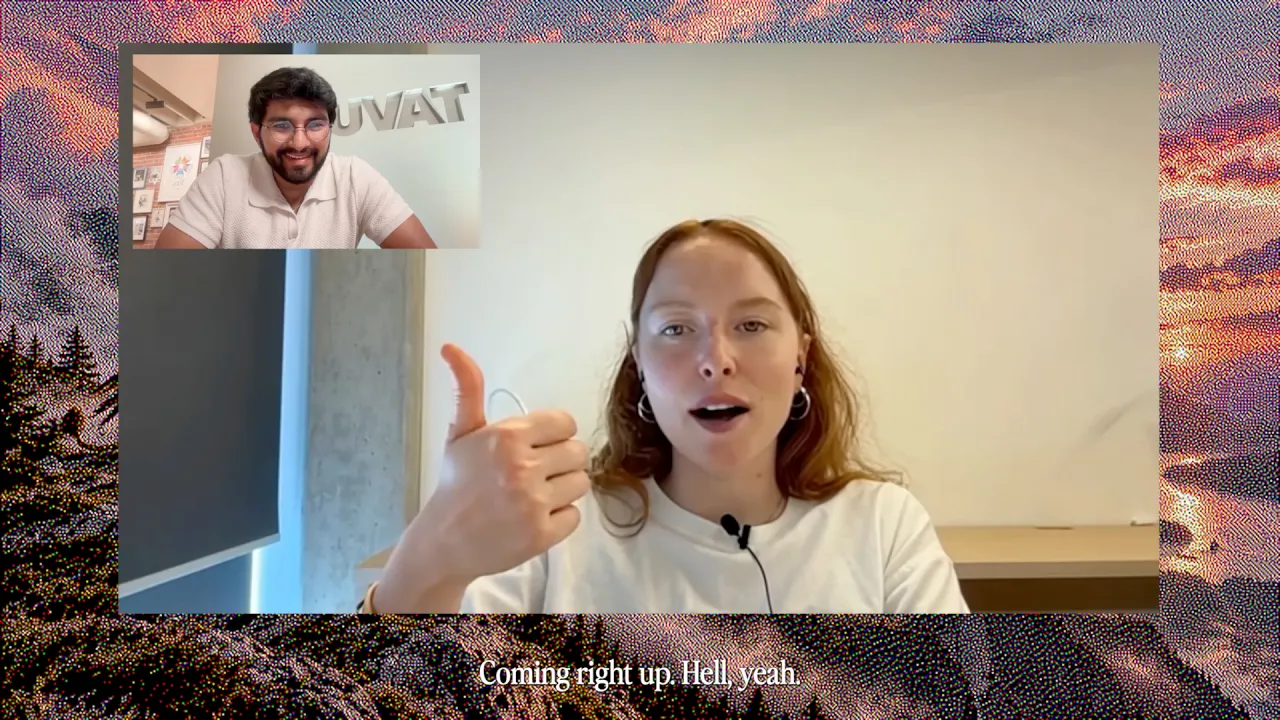
Earlier this month, Tavus introduced Griffin. It isn’t a chatbot. It’s an AI that appears as a realistic human on a video call: it sees you, hears you and talks back face to face, in real time. Tavus released a short film of people talking to it. The shots are never really close up, and my guess is that if you zoomed in, the facial expressions wouldn’t fully hold up. Still, it felt real. It took me a second watch to understand why. It wasn’t the face. It was the timing.
REAL CONVERSATIONS
Real conversations are messy
We don’t talk in neat turns. We interrupt each other, we start answering before the question is over, we go quiet when the other person is still thinking. None of it follows a script, but all of it is human.
I kept thinking about Nuri Bilge Ceylan’s films. In some of them, characters cut each other off and don't wait for the other person to finish, and that’s a big part of why the scenes feel like real life. Ceylan has said that early in his career he was so obsessed with natural dialogue that he secretly recorded real conversations, just to study how they’re built.

Samet and Nuray, just before a heated political argument where they keep cutting each other off. About Dry Grasses (Kuru Otlar Üstüne), Nuri Bilge Ceylan, 2023.
GRIFFIN
What Griffin gets right?
Most voice and video AI still takes turns: you talk, it waits, it answers. Griffin listens and watches while it’s talking, and it seems to know when to stay quiet and when to jump in without waiting for you to finish. It also notices when you’re thinking or busy with something. In one clip, a man named Sagar goes quiet while soldering a circuit board. Griffin doesn’t rush to fill the silence. It seems to understand that he’s busy, not done, and decides on its own when to speak again. Tavus clearly cared about this.

Full video at
The numbers point the same way. In Tavus’s own test, 26 out of 54 people thought they were talking to a real person after a one-minute video call. Their previous setup, built around a model for rendering realistic faces, convinced 2.4% under the same test. It’s a small study and the company ran it itself, so I wouldn’t treat it as proof. But the big jump didn’t come from a better face. It came from better timing.
FINAL THOUGHTS
Realism you can hear
As a designer, I usually think about realism as something you see: a better face, more detail, smoother movement. That still matters. Griffin reminded me that it’s also something you feel in a conversation: the pause, the interruption, the moment someone jumps in. Next time I work on anything conversational, I’ll give both the same attention: how it looks, and when it speaks.

